Tuesday, May 31, 2011

Blair's Rules of Writing

I thought I would paste these "rules" provided by Eric Blair (aka George Orwell), given that I find myself obsessed with becoming a better writer. They were cut and pasted from the Wikipedia article. I am sure I have read this book/essay, but I don't have a copy near at hand.

The rules seem somewhat inadequate to me. They are injunctions that might be given to beginning writing students in a public school, usually for those who are under the age of 18. The cultivation of a style is much more subtle, and there are many roads to success.

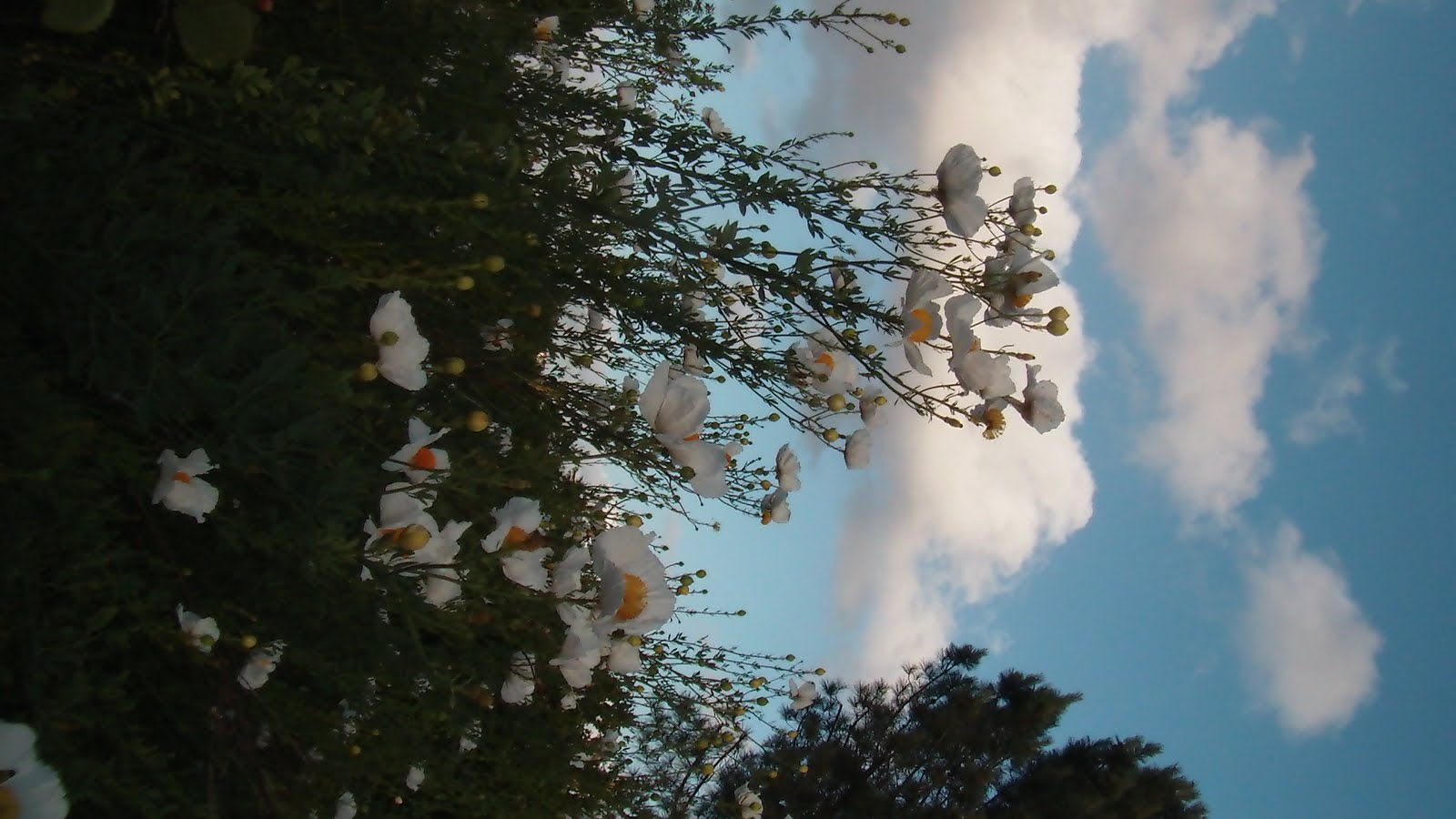
For example, the injunction to rely on common, every-day English words seems somewhat provincial to me. It pares back the lavish growth with the exuberant vegetation and the beautiful and vibrant blooms of the rose bush to that of the hard, bare roots. It seems somewhat too utilitarian in focus. We are not writing software where efficiency is of the essence. We are painting with a brush on a variety of canvasses and an infinite palette.

I will not be limited to a repertoire of ones and zeros, as with any digital language.

+++++++++++++++++++++++++++++++++++++++++++++++++++++++++++

In "Politics and the English Language", Orwell provides six rules for writers:
  • Never use a metaphor, simile, or other figure of speech which you are used to seeing in print.
  • Never use a long word where a short one will do.
  • If it is possible to cut a word out, always cut it out.
  • Never use the passive where you can use the active.
  • Never use a foreign phrase, a scientific word, or a jargon word if you can think of an everyday English equivalent.
  • Break any of these rules sooner than say anything outright barbarous.
—George Orwell, Politics and the English Language, Horizon, April 1946

Monday, May 30, 2011

Memories of Mission San Luis Rey

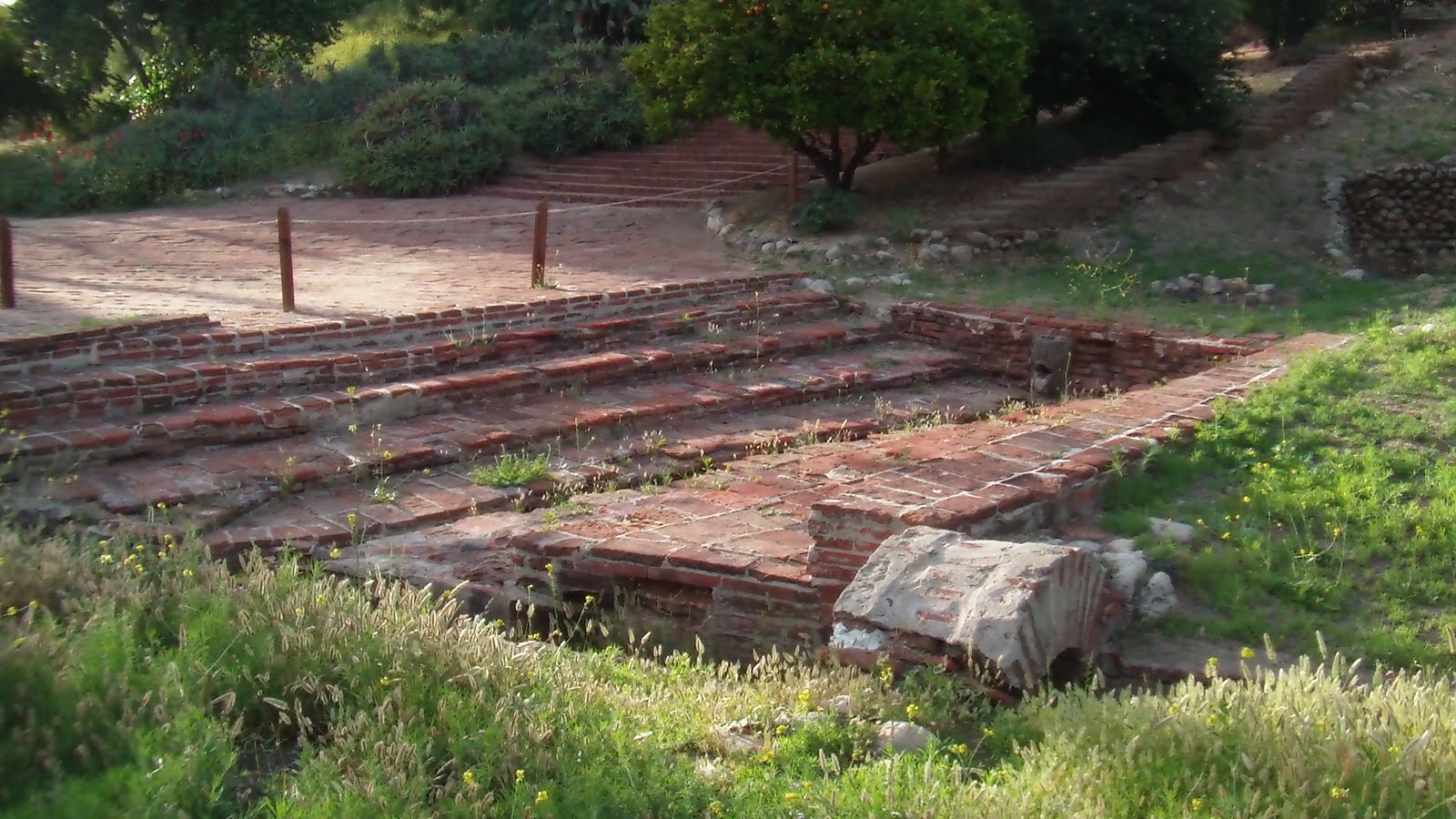
And here are a few photos of the Mission San Luis Rey, located next to the 76 freeway near the city of Oceanside, CA. We used to frequent this mission when we were young, and spent many Easter holidays here in the 70s and 80s. It was the location where the entire family would reunite if it was a special occasion. Otherwise, we spent our time with our cousins in their apartment, or walked around the town where I would guide my cousins to the nearest pharmacy in my never-ending quest for comic books.

When we were young we were no different than other children raised in this country. We would conduct Easter egg hunts even though this custom was completely alien to our Mexican-born parents. The little kids would buy woven baskets with green-colored straw, and we would eagerly await the moment when the adults would venture out to the open area where there used to me more trees, and hide the chocolate treats. I still tease my brother and my cousin mercilessly about the fact that they allowed themselves to be photographed with their Easter baskets, thus subverting their future status as family patriarchs.

It fills me with a sense of unbearable nostalgia every time I am here. The place is lit gently by the coastal sun, and it is typically a lonely place. I took these photos yesterday, and I was surprised that no visitors seemed to be here during a long holiday weekend. I suppose modern sensibilities have changed, and families of all types prefer other places.

The fact that it is lonely contributes to the sense that it is populated by ghosts from our past. Yes, the native Americans lived here and built this mission, and Mexicans lived here and continue to live in this area. However, I am referring to more personal ghosts, those of our younger selves who have changed so dramatically but who can be vividly evoked from time to time.

We all had dreams, and we all thought of grandiose projects when we were young. But we also have these moments of unbearable beauty and innocence, and the regular trips of my childhood are examples of these. We would romp around the mission, having little respect for ceremony and, even after all these decades, I am unable to remember if I actually attended a church service here. We would venture into the ruins, and we imagined that we might be amateur archeologists, finding a hidden treasure. I think I actually looked for Native American arrowheads, or a sign of hidden passages or burial grounds. The site, of course, was only a laundry area for the resident population.

Ghosts also take the form of memories of loved ones. A few of them accompanied us here, and I will always treasure their memory. For example, my cousin Ruben came here to join us one year when he was living temporarily in this country. I will never understand why he chose to return to Mexico. I seem to remember that my grandmother came here with us as well, although my most piercing memories of her are associated with her house in Mexico. I imagine that, for a time, I am accompanied by them as well and the intervening years have disappeared. Time has reversed itself, and I am the lonely child I was back then, desperate for attention and affection.

The sunlight seems tinged with melancholy each time I visit this mission, and I felt like weeping when I saw the pain in the face of the statue of the Virgin Mary.


Eternal Observer -- ORomero (c) 2011
Copyrights ORomero 2011

The Beach of my Memories

Here are a few photos taken from the Oceanside, CA pier. We used to frequent this beach when we were young, even though we didn't actually reside on the coast. This was the idyllic locale of my youth, when we would visit our cousins and dream in the sunlight of a lazy afternoon.


Saturday, May 28, 2011

Return to Tijuana (A 15 plus year exile)

It has been more than fifteen years since I have been to Tijuana, Mexico. When I was much younger and harbored more illusions about the future, way back in the early 1990s, I used to make trips to this border city. It was an adventure, and appealed to me as an exotic outing, one in which I would supposedly get in touch with my roots while making a few purchases. While young people would make it a ritual of passage to attend the clubs and become inebriated, and older adults would buy curiosities, (velvet paintings, blankets, presription drugs and, most often, hard liquors), I was motivated to go in order to look for books of all types. I would go to the many newspaper stands and buy photonovelas, as well as look for bookstores to buy varios textbooks. I was never as successful as I might have hoped. While the newspaper stands were everywhere (not this time, however), there were few bookstores and I would typically not find the values I had been looking for. It was my quest when I made the trip, but all I found were small dingy shops that catered to school kids, where textbooks were available but little else. If there were a modicum of books they consisted of a slim selection of Mexican classics, all of them from the Porrua editorial line that specialized in inexpensive paperbacks with no editorial footnotes nor annotations. My quest was a very modest one that met with even more limited success, and I would trudge back to the border, to be met with long lines as people were returning.

Today what motivated me was my desire to attend a folklorico festival. It was sponsored by a local folklorico group, the Ballet Folklorico Ticuan, and was held in the downtown area, close to the intersection of Avenida Revolucion and 2nd Street. A short stretch of the street was closed and a stage was set up. Immediately preceeding the event there was a short parade by the participating groups. The parade was not a gaudy affair. There were no community groups, no marching bands, no dignitaries, no celebrities. It started late, shortly after 1:00 p.m. and consisted only of folklorico members walking down the street with no other accompaniment. And since the tourists have abandoned Tijuana and very few locals are on these streets, it seemed as if they were parading through a ghost town.

Tijuana is a city that is struggling. It looks as if it has been knocked on its back and is undergoing the final count in a boxing match. I see it in the defeated attitude of the residents, in the lack of people on the streets, in the aura of pessimism and defeat that I seem to detect throughout the area. It is a far cry from the cacophony of hawkers and the waves of people that used to crowd this city in the past. Back then, Avenida Revolucion was full of activity. There were bars and clubs everywhere, and hordes of excited tourists, especially young Americans who were looking for cheap thrills and unsavory stimulation. Painted burros were located at every street corner, with eager photographers inviting people to pose for photographs. There were hustlers everywhere, and in a sense, it was a constant din that was intrusive but also indicative of a certain optimism that seems to have vanished. Now, the few tourists who I saw are the poor bohemian types who hardly look prosperous and who are probably unable to spend very much. The suburban Anglo crowds are noticeably absent.

This tourism industry has contracted sharply as a result of the economic difficulties and, probably most significantly, the drug wars in Mexico. There has been a spike in violence during the last few years as Felipe Calderon continues to pursue his obsessive, quixotic, counter-productive war against the drug barons, and as a result, we have been bombarded in the United States with news about the calamitous consequences. These are, of course, increased hyper-violence of the most sordid type, with drug barons killing and kidnapping people, with decapitated bodies discovered with frightful regularity, with mass graves discovered and with the unsettling sight of military troops that have been called into many of the most unstable border cities.

We also hear a constant stream of reports about narco leaders who are on the run and are occasionally caught. The supply is inexhaustible, like the Hydra that grows two head for every one that is cut off. We also hear of their hired help, unfortunate souls who have lost their humanity such as the famous "Pozolero", a man who would receive corpses and would dissolve them in barrels of acid until there was precious little left to identify them. He would convert what had been living and breathing people into a soup, the homely "pozole", all in the service of the drug barons.

There are advisories against going to Mexico, and we are told that it is not safe. And despite all of this, of course, the city has no choice but to struggle to survive. I feel as if Mexico is in a no-win situation. They are heavily dependent upon trade with the United States, but this dependence has created the conditions for a rapidly expanding drug trade that has severely undercut the security infrastructure of the country. The development that was promised as a result of the Free Trade treaty of the 1990s has evaporated and it is no wonder that capital has been fleeing from Mexico. News of rampant crime and violence as well as the growing economic disparities has resulted in a sputtering economy that is in a deep freeze. While other countries in Latin America such as Brazil are experiencing record rates of growth by reaching out to the rest of the world, especially to a dynamic China that sports an impressive halo (who knows how long that will last?) Mexico is tied to a fading giant. I hate to say it, but the United States is a country in decline, and Mexico is unable to free itself. I fear they will be unable to avoid being dragged under.

As indicated above, while taking a short stroll along the plazas and the streets I detected an aura of desperation. During any weekend but particularly during a holiday weekend (this Memorial Day weekend), the city should have been a bee hive of activity. There should have been a massive influx of tourists, and the city should have seemed a more attractive place for investment. Not now. I saw evidence (it is hardly hidden) of deteriorating buildings, of burned hulks of buildings, of roads that are not well maintained, and even of desultory beggers who seem to be going through the motions without any expectation of success. Twenty years ago we used to be swarmed by piteous Indian women hawking boxes of Chiclets. Once again, not now. There are a few but most seem to have resigned themselves to being ignored. There are no more easy pickings among the prosperous tourists because the tourists have largely disappeared.

As I arrived I also would have to confess that I didn't feel safe. I felt as if I might be accosted and robbed at any moment. I would be careful not to be followed, and would panic whenever young men would draw near. The dynamism of Tijuana used to hide the seediness. Now, there is no veil to disguise this. I was desperate to finish taping the event in order to return. And, I have to admit, I was so very, very exhausted at the end of the day, tempted to take up the incessant offer of a "taxi" but knowing that I would have been charged $20 for a one-block ride. That hasn't changed.

I was allowed to stand in an upper floor of a building facing the stage. I was surprised that I was allowed to do so. The guard insisted that I ask permission, and then he graciously granted it. This indicated to me that there is such a thing as a Tijuana Complex. People want to feel recognized and treated with respect, and for most of its history Tijuana has been sorely abused. It is the forlorn child who is peering through the fence with longing at the opulence of San Diego.

Also, I have to state for the record that Tijuana will not prosper if they insist on overcharging the few tourists who arrive. I went to a KFC in order to buy what I thought was a "snacker" sandwich, the kind that are sold for $1 in the US. There was a sign that said "49c". Of course I assumed it meant "49 cents", and I thought it was reasonable that is should be half as expensive as in the US. When I tried to pay with a dollar bill, I was told that the price was really "49 Mexican Pesos", which in American currency is about $4.90 (the dollar is trading at about 11 pesos). I was outraged. How is it that they can try to charge such high prices in Mexico? Are those only tourist prices because, otherwise, I see no way in which Mexicans could afford to pay a day's wages for one small sandwich. Manifestly these are tourist prices and they are offensive. The commercial establishments will not make up for low volume by overcharging tourists. I walked out in disgust without completing the purchase.

I know, I know, it is the eternal dynamic of two unequal economies sitting side by side. American tourists used to be so patronizing when visiting Mexico, and this was sorely resented, but the resentment was mitigated by overcharging them. Now the American tourists (and we Mexican Americans of course are counted among them) have abandoned Mexico, which is even more of an indignity. Perhaps this engenders hostility as well as even more severe overgouging. I was angry at being treated as a golden goose to be divested of my eggs. Yes, to be cheated does have an accompanying sexual connotation of losing one's sense of virility.

Here are a few photos I took with my camcorder. They are somewhat out-of-focus along the edges, but they are in a format that I think is pleasing. It is similar to a 6x9 or 6x12 negative, and it makes me want to experiment with my large format cameras once again. However, I can't go back to film. It is too expensive, and too prone to exposure errors, especially if I am trying to use slide film. Also, the old cameras that I have bought on Ebay have not been the most reliable cameras. My 6x9 Agfa Viking camera has what I suspect are pinhole leaks but I have not confirmed this yet. I have a roll that I loaded almost six years ago, but I have not even complete the roll yet.

Now, modern-day Tijuana:

There is now a new landmark that I don't recall from the 90s. It is the Tijuana Arch. It is not nearly as big as the St. Louis Arch, and it does seem strangely insubstantial, but is is easily visible. There is also a performance stage next to it where singers were trying to work the sparse crowds. It was somewhat dreary to see this, especially when a singer would apologize for having to circulate among the crowds with a basket to ask for donations. I think they made a bee line for any tourists visible, but there were very few. I think I stood out, though, because they approach me.


The above building has a beautiful facade.

The streets in Tijuana seem strangely abandoned.


Trinkets are displayed on every street corner, but I saw very few sales.


As the above photo demonstrates, Tijuana is no longer a bustling city.


Hitting close to home (Barking Dogs Never Bite)

After watching the South Korean director Joon Bo's film "Barking Dogs Never Bite", I couldn't help but reflect on how close this film hit to home. This is an occasionally funny and frantic film that details the madcap and increasingly desperate means that an aspiring professor uses to address a barking dog problem at this apartment complex. Of course, this problem serves as a point of transference for others problems that are afflicting him, principally among them the fact that he is treated in a humiliating way at home and he is becoming increasingly desperate in his attempt to secure tenure.

I have seen previous films by t his director, and I have found them to be quirky but also, at times, profoundly insightful. This film veers a little more towards comedy, and we are somewhat shocked a certain points by the extremes to which the character will descend. In an early scene he is shown actually dangling a dog off the roof, then attempting to hang it in the basement, before actually locking it in a closet. Evidently there are vestiges of a formerly more cruel and dispassionate attitude towards dogs in the Korean sensibility. Such depictions would have immediately elicited howls of condemnation on the part of Westerners.

The friendship between the two young women is affecting. They are an odd pair, one of them a heavy girl who runs a small shop and the other a thinner girl who seems to have difficulty taking in her world but who has fantasies of achieving fame and recognition. They comprise a bickering pair that recalls other archetypal pairs, such as the bickering, wandering laborers in Kurosawa's "The Hidden Fortress".

There are various turns in this film and, eventually, the aspiring professor is humanized. He comes to regret his extreme actions as he disposed of various dogs, the loss of one of which causes the death of an elderly lady. (Yes, it does seem extreme, but then again, I can also appreciate that pets are part of very strong relationships for many people, and this seems to drive home the point about our societies in which people fix on things and other objects rather than on the more stressful ordeal of talking to other people.)


In the end, we have a more serene, somewhat regretful character, and we have a beautiful scene where the mousy girl who had been lpursuing the dog kidnapper is able to achieve another one of her dreams, that of hiking in the mountains.

And cats and dog will still serve as substitutes for real human relationships, and will serve as the point of transference for problems that afflict us. (As I write, there is a very annoying dog barking in my back yard, as well as the far-off crowing of a rooster.)

Wednesday, May 25, 2011

Finally Home

I thought I should note that I finished reading Homer's Odyssey. In reality, I am taken by the culminating scene, one of dreadful revenge that is wrought by the returning king who manages to massacre the crowd of loutish suiters who wished to win the hand of his faithful wife, Penelope. I was also taken by the fantasy elements of this epic, and in particular, the trail of perils that is encountered by Odysseus as he seeks to return to his homeland in Ithaka.

But what sticks to me, nonetheless, is the sheer joy of a character such as Antinoos, the suitor who lead the other in devising plans to eat away at the estate of Odysseus and revel in the bonhomie that is characteristic of a band of thieves. He is very skilled at manipulating as well as deceiving others, and it is indeed entertaining to see how he deflects all criticism as he tries to justify his behavior. Of course, he has no excuse, and his punishment is dreadful, but one relishes his sheer chutzpah, to quote one of my favorite Yiddish words. He abuses all hospitality, and yet does so in an entertaining way that makes me, perversely, root for him. Even his death is entertaining, given that he is the first to be felled by the arrows that are strung by Odysseus, he who launches one into his throat as he, unsuspectingly, is drinking with a mug up to his mouth. If this is not slapstick a la Roadrunner and Coyote, I don't know what is.

All in all, I continue to be fascinated by the Greek world and by ancient Greek culture. As I have confessed to a colleague at my university, it makes me wish that I had become a classicist. I wouldn't be any more prosperous, but I would have been much more stimulated by what I consider the true roots of my identity. They don't lie in provincial Mexico, they lie in ancient Greece.

The Golden Country (Good Morning 1959)

Yesterday I had the chance to see "Good Morning", a film by Ozu released in 1959. All in all, as I was driving along the freeway on my way to work, I mused that it was a fairly innocuous film. It somehow lacked the psychological depth that I appreciated in other Ozu films, but it was nonetheless an enjoyable work that hearkens back to a time that is much sentimentalized by all of us. This is, of course, our youth.

It details the exploits of a pair of brothers who decide to protest after being scolded by their parents. They live in what would seem to be a suburban Japanese development but without the space that we associate with American suburbs. They houses are closely clustered and, indeed, are adjoining each other. In one instance, an elderly man who is unemployed actually steps into the house of his neighbor, confusing it with his. Given that traditional Japanese doors consist of sliding screens, it is not too unremarkable that he is easily able to gain entrance.

The behavior of the children can't help but recall all of our own childhood foibles. It is also noteworthy that the film is neatly marked by bookends that are comprised of characters at both ends of human life. The old grandmother who forgets to give her daughter the money that was left with her for safeguarding also seems somewhat petulant, and she is similarly treated with a lack of dignity. This, this, is an experience that recurs within the human lifespan.

I am struck by the idyllic tone of the film. While there are a few characters who appear to suffer, such as the elderly man alluded to above who has lost his job and is unable to survive on his pension, or the young and dashing man who translates manuscripts after losing his own job, there seems to be no overt display of social commentary. The conflict that does exist is more along the lines of cultural behavior, and the community otherwise seems quite orderly, characterized as it is by the extreme politeness of the Japanese.


The boys decide to mount a strike. They will not speak, and they maintain this stance for what seems to be maybe a day or two. There are many comical episodes, and this silence contributes as well to conflict between neighbors, but otherwise it is quite innocent and, in this case, innocence is the quality that the director seems to be cultivating.

It reminds one of a rosy view of childhood, sans humiliation, bullying and desperation. These kids, after all, are leading a comfortable middle-class existence in a Japan that is in full reconstruction, on its way to the Japanese miracle. And this film can't help but evoke a sense of nostalgia for a childhood that never was, but that is nonetheless intensely desired.

The film doesn't hit the notes that other Ozu films do. There is none of the subtlety and none of the sense of family roles that are shifting in response to social changes. Things are stable, and there is none of the sadness and the self-reflective quality that I have seen in so many of his other films.

All in all, it was an innocuous film, one that incorpates good-natured jokes involved flatulence and a lack of bladder control. These are touches that can't help but evoke the current trend of Judd Apatow films that are so popular nowadays, and that represent a continuation from the "American Pie" franchise that first appeared in the 1990s.

One wonders now about how accurate our perception of time has become. The hues of this film, and the wide-open scenes, suggest an airiness that suggest, as in all Ozu films, meditation and an uncluttered mind.

I wish my childhood had been like that portrayed here.